Welcome to West Gables Rehabilitation Hospital
About Us
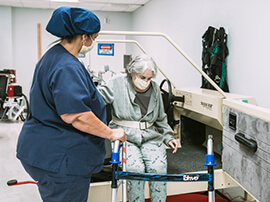
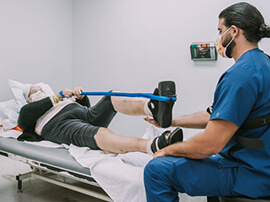
For more than 20 years, the highly specialized and accredited team at West Gables Rehabilitation Hospital has made it our mission to help patients reach their functional goals while providing the highest level of post-acute medical care in a caring and culturally sensitive environment. Our multi-disciplinary team approach is centered on a dedicated staff of doctors, nurses, therapists, case managers and support personnel who through one-on-one care help patients restore function and achieve independence in all areas of their lives.
Clinical Excellence
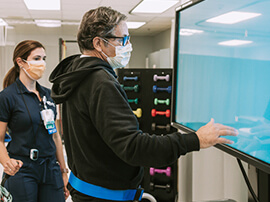
West Gables Rehabilitation Hospital is accredited by The Joint Commission and by the Commission on the Accreditation of Rehabilitation Facilities (CARF). Our 60-bed, 50,000 square foot facility is fully equipped with two state of the art therapeutic gyms (one for inpatient and one for outpatient care), an in-house pharmacy and a fully staffed cafeteria. What sets us apart from the competition is our ability to stay at the forefront of industry trends and the latest developments in equipment and therapy technology. Our entire team is committed to providing safe, quality and cost-effective care to each and every patient.
Specialty Programs
West Gables Rehabilitation Hospital offers a broad level of expertise in a number of specialty programs designed to meet the needs of specific injuries or disorders. Many of these programs utilize rehabilitation for conditions historically considered unresponsive to rehabilitation.
Our Staff
Our Medical Doctors are physicians specially trained in rehabilitation who will coordinate each patient's overall treatment program.
The Rehabilitation Nurses give around-the-clock personal care and support and teach patients and families more about their abilities and treatments. They have received additional education and training in rehabilitation and are a good resource for answers to patients' questions.
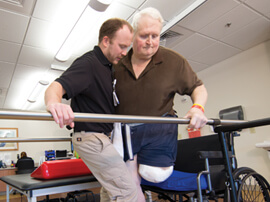
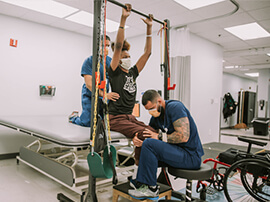
Physical Therapists
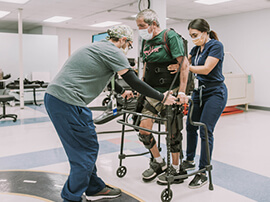
teach exercises that may help improve balance, strength and mobility. Treatment may include:
- Exercises to restore motion, strength and a greater degree of independence
- Joint and soft tissue mobilization
- Pain Management
- Orthotic/prosthetic training
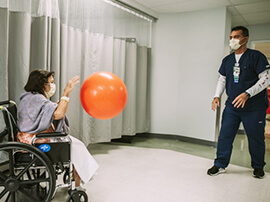
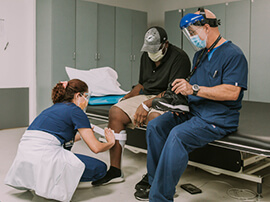
Occupational Therapists
focus on improving everyday living skills, including bathing, dressing and eating. Treatment may include:
- Strengthening specific muscle groups to help restore fine and gross motor skills
- Comprehensive home evaluation and patient education
- Instruction in adaptive living techniques, joint protection, work simplification, energy conservation and motor coordination
- Customized adaptive equipment
Speech Therapists
focus on improving speech-language expression, comprehensive, oral motor skills and swallowing ability. Treatment may include:
- Receptive or expressive language therapy
- Training in assistive communication devices
- Modified barium swallow studies
- Dysphasia management
- Electrical Stimulation
Neuropsychology Services
On-site specialized, individual neuropsychology services are also available.
Patients and Visitors
What You Can Expect
During the initial phase of your treatment, you may be asked to participate in a series of evaluations. It is critical that we perform a complete assessment because your treatment program will be based on the needs that are identified. We will need your complete attention and best efforts during all activities, and we will keep you informed on how we think you're progressing.
Most patients will receive a minimum of three hours of physical and occupational therapy each day, at least five days a week. Speech therapy, neuropsychology and other services are provided in addition to the three hours of physical and occupational therapy. This therapy is broken up into a morning and afternoon schedule, with most therapy finished by 4:00 p.m. each day.
Prior to your discharge, your case manager will meet with you and your family to discuss any services or equipment you may need after you leave the hospital. One of your therapists may visit your home to identify any potential hazards or necessary modifications. You will receive a follow-up call about two weeks after discharge and again at three months to discuss your concerns and to check on your progress.
Family Involvement
We encourage family members to be involved in your treatment by providing moral support and by observing therapy sessions. We may ask to have a conference with your family to talk about your goals, the progress you've made and your plans for discharge. A temporary pass may be granted prior to discharge in order to give you and your family an opportunity to practice new skills outside of the hospital.
Visiting Hours are:
Monday thru Friday 4:00 p.m. to 8:00 p.m.
Saturday and Sunday - 11:00 a.m. to 8:00 p.m.
Our cafeteria has been recently remodeled. Service hours:
Monday thru Friday
Breakfast - 7:00 a.m. to 10:00 a.m.
Lunch - 11:30 a.m. to 3:30 p.m.
Dinner - 4:00 p.m. to 7:00 p.m.
Weekends
11:00 a.m. to 3:30 p.m.
The cafeteria is open for sandwiches, snacks, soda and
coffee.
What You Should Bring
- Loose-fitting clothing
- Sturdy, low-heeled shoes or sneakers
- Undergarments/socks
- Nightgown or pajamas
- Robe/slippers with non-skid shoes
- Personal items such as eyeglasses, hearing aids, cosmetics and toiletries
- Current list of medications in properly labeled containers. For safety reasons, patients are not allowed to keep medications in their rooms
- Copies of insurance cards and legal documents, such as a living will or DNR orders
All of your personal belongings should be labeled with your name. It is best to leave valuables (cash, jewelry) at home.
Hair styling appointments can be scheduled with an order from your physician.
All patient rooms have flat-screen cable TV and wireless internet availability.
Rehabilitation Programs
- Amputee
- Arthritis
- Balance/Vestibular Disorders
- Brain Injury
- Cardiac Rehab
- Joint Replacement
- Lymphedema
- Neurological Rehab
- Oncology
- Orthopedic Rehab
|
- Pain Management
- Pulmonary Rehab
- Speech Disorders
- Spinal Cord Injury
- Sports Injury Rehab
- Stroke Rehab
- Swallowing Disorders
- Vestibular/Balance Rehab
- Wound Care
|
Rehabilitation Services
- Case Management
- Direct Admissions
- Family Training
- Home Evaluations
- Inpatient Services
- Laboratory Services
- Neuropsychology
- Nutritional Counseling
- Occupational Therapy
|
- Orthotic and Prosthetic Services
- Outpatient Services
- Pharmacy Services
- Physical Therapy
- Radiology Services
- Rehabilitative Nursing
- Respiratory Therapy
- Social Work Services
- Speech/Language Therapy
|
Benefits of Therapy:
- Increased strength and mobility
- Increased gross motor skills
- Increased independence
- Improved posture and body mechanics
- Improved balance
|
- Decreased pain
- Increased flexibility
- Increased ADL independence
- Family/caregiver training/education
- Increased home/community functional mobility
|
Benefits of Outpatient Program:
- Increased community re-integration
- Increased opportunity for social participation
- Increased opportunity to apply learned therapeutic skill in a community environment
- Opportunity to clinically advance to higher levels of functionality and independence
© SelectMark 2013 | Privacy Policy
|